All-on-4 Dental Implants: How Full-Arch Implants Work
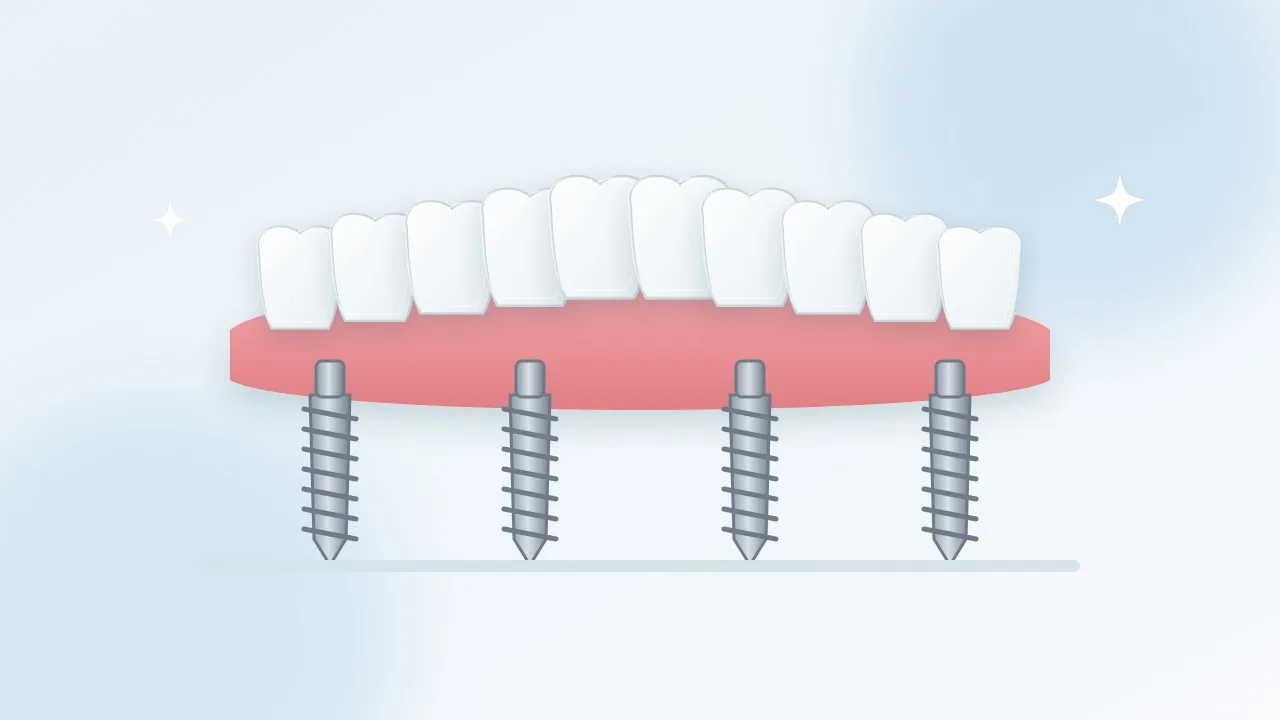
All-on-4 and All-on-X treatment replaces a full arch of teeth with a fixed bridge on four to six implants. Here is how it works, who it suits and what it costs.
If you are missing most of your teeth, or your remaining teeth are failing, a removable denture is not the only option. All-on-4 treatment, also called All-on-X or full-arch implants, replaces an entire upper or lower arch with a fixed bridge attached to four to six dental implants. The new teeth stay in, so you brush them rather than take them out at night.
How All-on-4 Works
Instead of placing one implant for every missing tooth, the dentist places four implants in the jaw. The two front implants go in straight; the two back implants are often angled to make the most of available bone and avoid the sinuses in the upper jaw or the nerve in the lower jaw. Some plans use five or six implants, which is why many offices say All-on-X.
A full-arch bridge is then attached to those implants. It is fixed in place and can only be removed by the dentist for cleaning or repair.
The Typical Treatment Timeline
- Consultation and planning: a 3D CT scan, photos and impressions or digital scans help plan implant positions and the look of your new teeth.
- Surgery day: any remaining failing teeth are removed, the implants are placed, and in many cases a temporary fixed bridge is attached the same day or within a few days.
- Healing: over roughly three to six months, the implants fuse with the bone. You eat a softer diet during this time.
- Final bridge: once healing is complete, the temporary is replaced with a stronger final bridge, often made of zirconia or acrylic over a metal frame.
Who Is a Good Candidate?
All-on-4 can suit people who are missing most or all of their teeth in one arch, have many failing teeth, or struggle with a loose denture. Because the angled back implants make good use of existing bone, many people can avoid extensive bone grafting.
It may not be suitable if you have uncontrolled diabetes, are a heavy smoker, have had radiation to the jaw or take certain bone medications. A full medical history and scan will show whether it is safe for you.
Benefits and Drawbacks
- Pros: fixed teeth that do not slip; no denture adhesive; the palate is left uncovered on the upper arch, so food tastes more natural; chewing is much stronger than with a regular denture; many patients leave with temporary teeth on surgery day.
- Cons: it is a major surgery with a recovery period; it costs much more than dentures; the bridge needs professional cleaning and occasional repairs; if an implant fails, the bridge may need to be remade.
How Much Does All-on-4 Cost?
Prices vary widely by region, materials and who does the work. Many offices quote somewhere around $15,000 to $30,000 per arch, and sometimes more for premium zirconia bridges or when extra implants or grafting are needed. Some quotes include the temporary bridge, extractions, sedation and the final bridge; others do not. Always ask for an itemized estimate so you can compare offices fairly. Many practices offer financing.
Alternatives to Consider
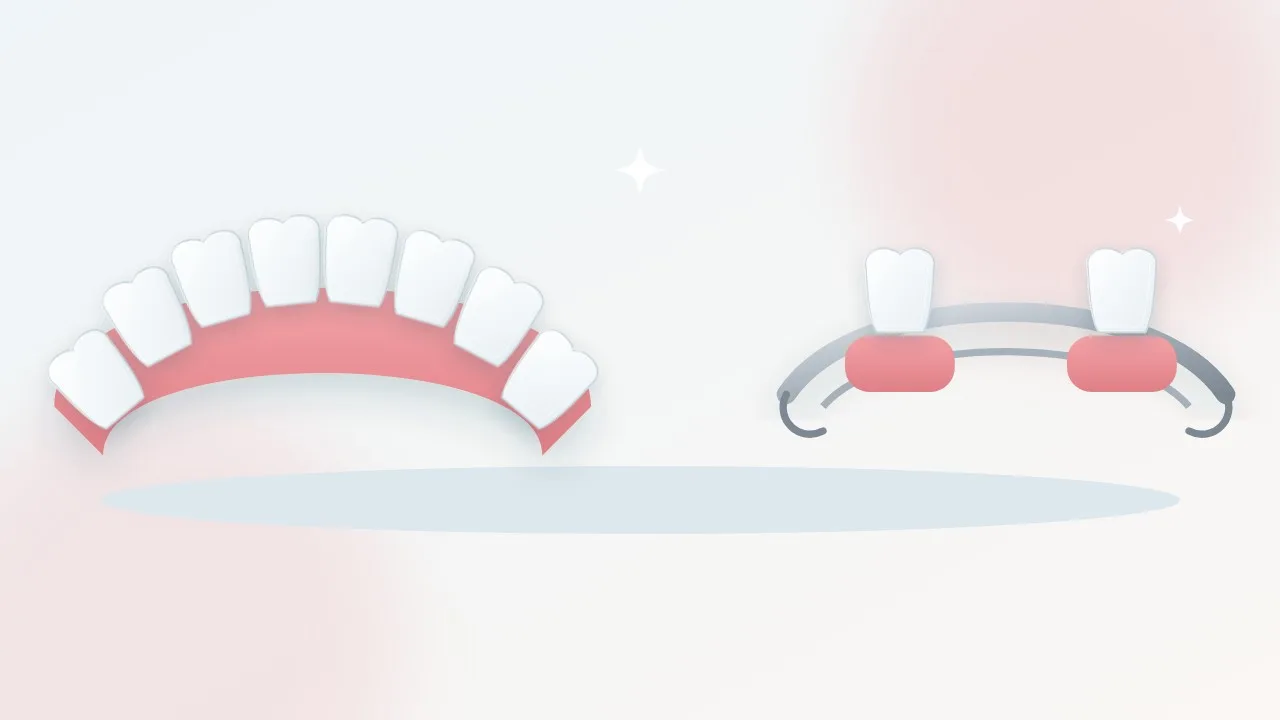
- Implant-supported overdenture: two to four implants hold a removable denture in place with snaps. It costs less and is easier to clean, though it is still removable. Read more in our guide to dentures.
- Traditional denture: the least expensive option, but it can move and does not stop bone loss.
- Individual implants and bridges: may suit people who still have some healthy teeth.
Choosing a Provider
Full-arch treatment is offered by oral surgeons, periodontists, prosthodontists and general dentists with advanced implant training, and some dedicated implant centers. Ask how many full-arch cases the team completes, who places the implants and who designs the bridge, what sedation is offered, and what happens if something breaks. Our guide on how to choose an implant dentist lists more questions.
Ready to explore full-arch implants? Find implant dentists on BizMox and compare offices near you.
Frequently Asked Questions
Comments (0)
Leave a Comment
You need to be signed in to leave a comment.
Sign in to comment