Dentures Explained: Full, Partial and Implant-Supported
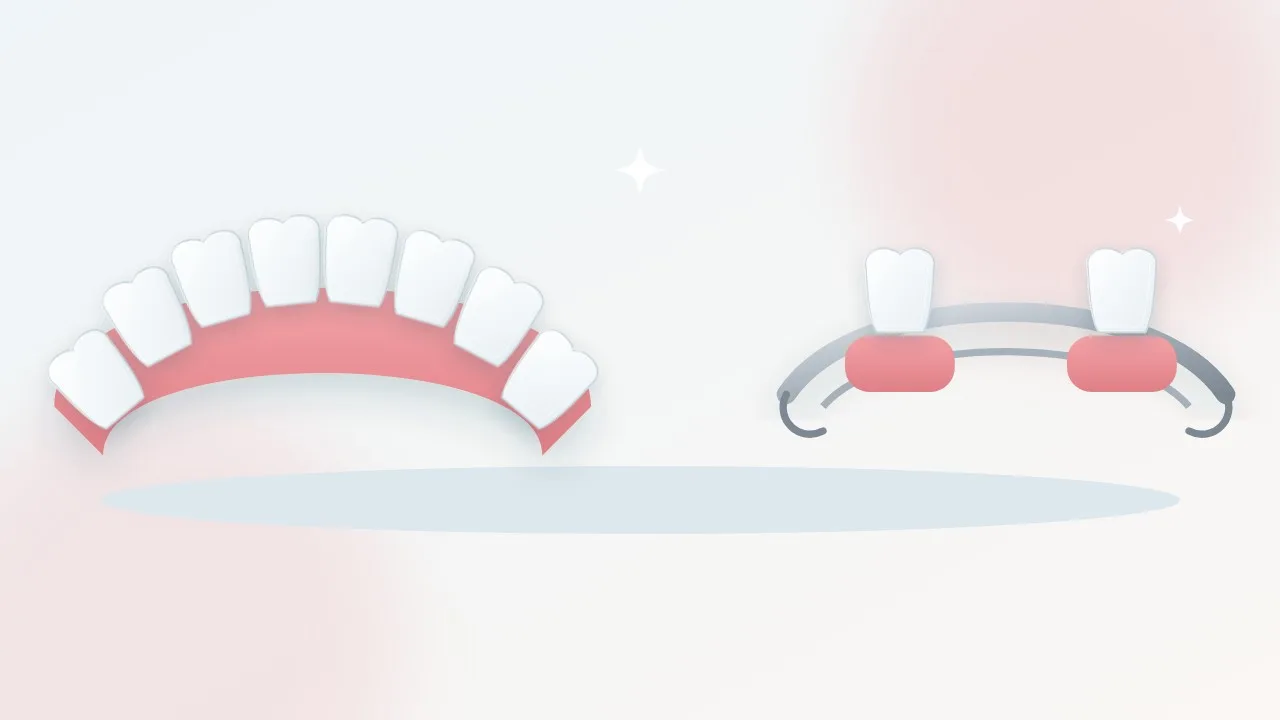
Dentures have come a long way. Compare full, partial and implant-supported dentures, including how they fit, what they cost and how to care for them.
Dentures replace missing teeth with a removable or implant-supported appliance. Modern dentures can look natural and restore much of your ability to eat and speak comfortably. The right type depends on how many teeth you are missing, the health of your remaining teeth and gums, and your budget.
Full (Complete) Dentures
A full denture replaces all of the teeth in an upper or lower arch. It sits on the gums and is held in place by suction, the fit of the base and the muscles of your cheeks and tongue. Upper dentures usually stay put better than lower ones, because the upper denture covers the palate and creates more suction.
- Conventional dentures are made after any remaining teeth are removed and the gums have healed, which can take a few months.
- Immediate dentures are made in advance and placed on the day teeth are removed, so you are never without teeth. They usually need relining or replacing as the gums shrink during healing.
Partial Dentures
A partial denture replaces some missing teeth and attaches to your remaining natural teeth. A cast metal partial has a thin metal framework with clasps and is strong and stable. A flexible partial uses a nylon-type material that is more comfortable and has tooth- or gum-colored clasps, but it can be harder to adjust. An acrylic partial, sometimes called a flipper, is often used as a temporary option.
If the teeth around a gap are healthy, a bridge or implant may be a fixed alternative to a partial.
Implant-Supported Dentures
An implant-supported denture, or overdenture, snaps onto two to four dental implants placed in the jaw. It is still removable for cleaning, but it no longer slides around, so chewing and speaking are much easier. On the upper jaw, the implants can allow a denture without a full palate, which many people find more comfortable.
For a fixed option that does not come out at home, ask about All-on-4 full-arch implants.
Comparing the Options
- Stability: implant-supported dentures are the most stable; lower full dentures are the least.
- Bone health: conventional dentures do not stop the jawbone from shrinking over time; implants help preserve bone.
- Cost: a basic full denture can cost well under $1,000 per arch at economy clinics, while premium dentures often run $1,500 to $4,000 or more per arch. Implant-supported dentures often cost several thousand dollars more because of the implants.
- Insurance: many dental plans cover part of conventional dentures as a major service; implant coverage varies.
Getting Used to New Dentures
Expect a few weeks of adjustment. Start with soft foods cut into small pieces and chew on both sides at once. Reading aloud helps your tongue and lips adapt to speaking. Sore spots are common at first; your dentist can adjust the denture, so do not try to file it yourself.
Caring for Dentures
- Remove and rinse dentures after eating.
- Brush them daily with a soft denture brush and a non-abrasive cleaner; regular toothpaste can scratch them.
- Take them out at night and keep them moist in water or a soaking solution so they do not warp.
- Brush your gums, tongue and any natural teeth.
- See your dentist regularly. Over time the jaw changes shape, and dentures often need relining every few years and replacing about every 5 to 10 years.
Choosing a Denture Provider
Dentures are made by general dentists, prosthodontists (specialists in replacing teeth) and dedicated denture clinics. Ask how many visits are involved, whether adjustments are included in the price, what materials are used for the teeth, and whether implant options are available if you decide to upgrade later.
Ready to explore your options? Find denture providers on BizMox and compare offices near you.
Frequently Asked Questions
Comments (0)
Leave a Comment
You need to be signed in to leave a comment.
Sign in to comment