Dental Bridge vs Implant: How to Replace a Missing Tooth
A bridge and an implant both replace a missing tooth, but they work very differently. Compare cost, timeline, lifespan and long-term effects before you decide.
Losing a tooth affects more than your smile. The gap can make chewing harder, let neighboring teeth drift and, over time, allow the jawbone in that spot to shrink. The two most common fixed ways to replace a single missing tooth are a dental bridge and a dental implant. Both can look natural and work well, but they differ in how they are built, how long they take and what they cost.
How a Dental Bridge Works
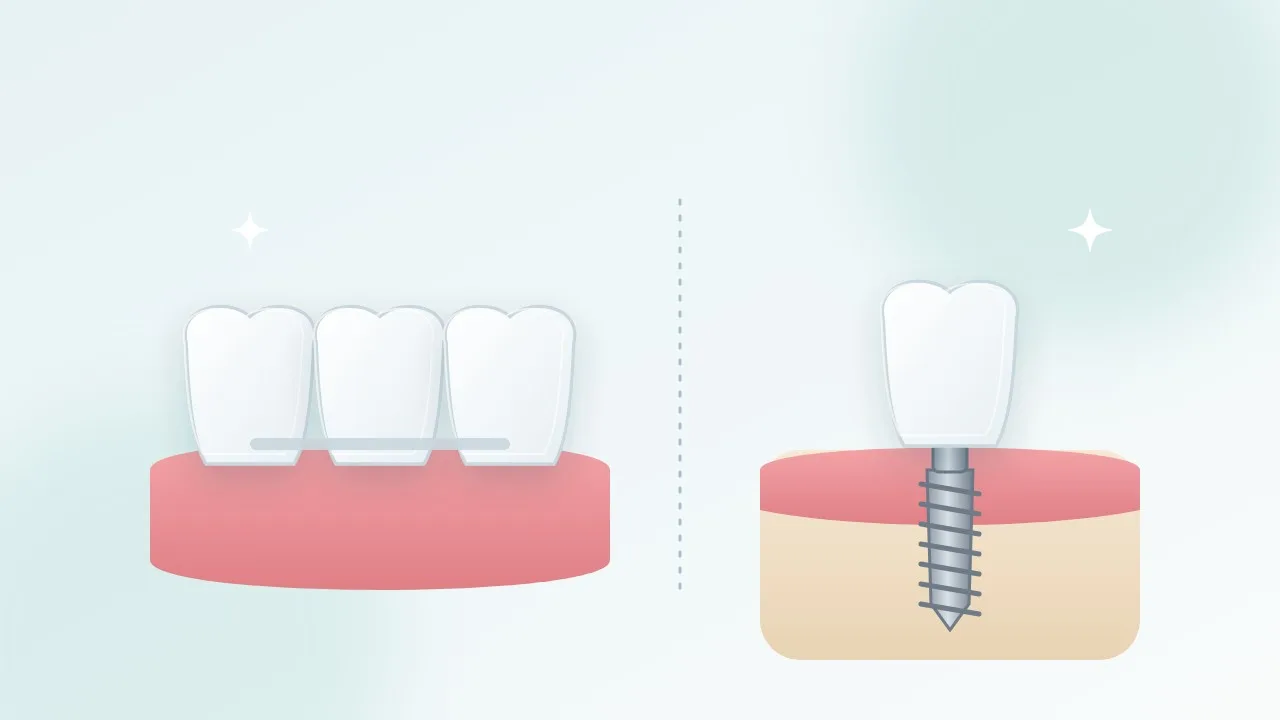
A traditional bridge is a single piece made of three or more connected crowns. The teeth on either side of the gap are shaped and crowned, and those crowns hold a false tooth (called a pontic) in the space. The whole bridge is cemented in place and cannot be removed at home.
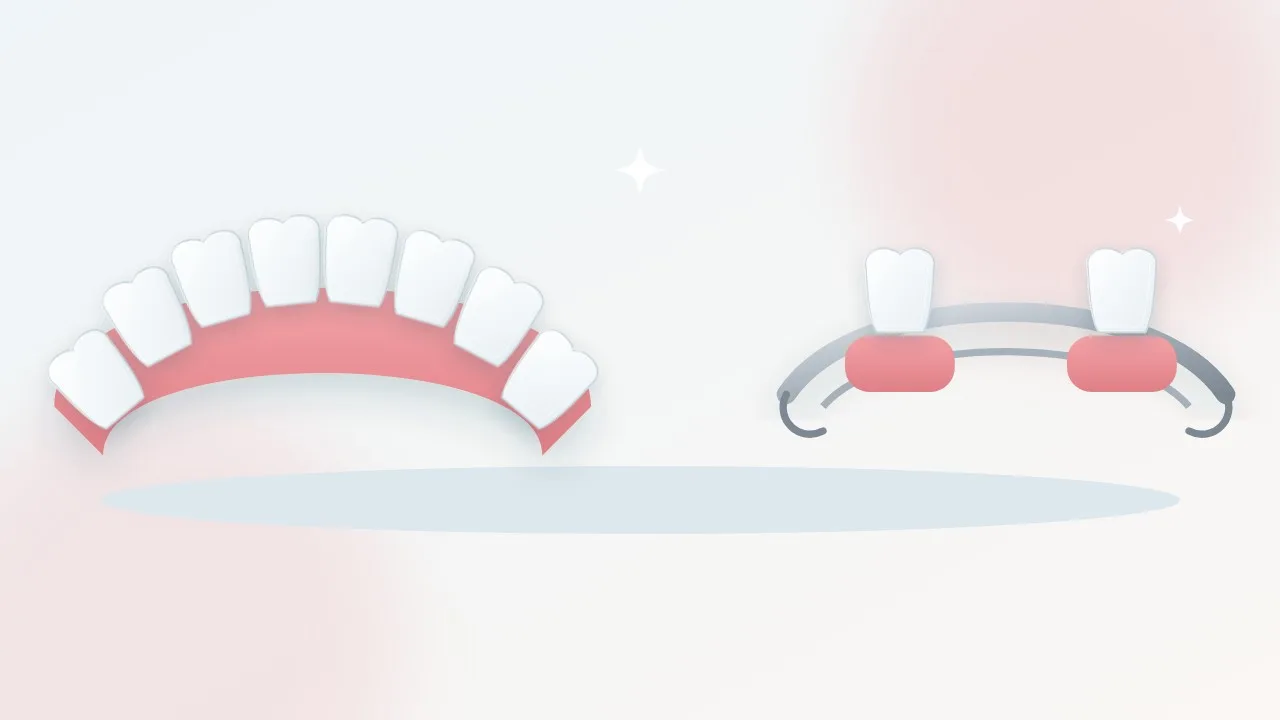
Other types include a cantilever bridge, supported on one side only, and a Maryland bridge, which uses small metal or ceramic wings bonded to the back of neighboring teeth and is often used for front teeth.
How a Dental Implant Works
An implant is a small titanium or zirconia post placed in the jawbone where the tooth root used to be. Over the next few months, the bone grows tightly around it in a process called osseointegration. A connector called an abutment is then attached, and a crown is placed on top. The implant stands on its own, so the neighboring teeth are not touched. Our guide to dental implants explained covers each step in more detail.
Bridge vs Implant at a Glance
- Neighboring teeth: a traditional bridge requires crowning the teeth on both sides; an implant leaves them alone.
- Timeline: a bridge usually takes two visits over two to three weeks; an implant often takes three to six months or longer, especially if bone grafting is needed.
- Surgery: a bridge needs no surgery; an implant requires a minor surgical procedure.
- Bone: an implant helps keep bone in the area; a bridge does not, so the gum and bone under the pontic may shrink over time.
- Lifespan: bridges commonly last 10 to 15 years; the implant post itself can last for decades, though the crown may need replacing eventually.
- Cleaning: you need floss threaders or a water flosser to clean under a bridge; an implant is flossed much like a natural tooth.
- Cost: a three-unit bridge often costs roughly $2,000 to $5,000; a single implant with abutment and crown often totals roughly $3,000 to $5,000 or more, before any grafting.
When a Bridge May Be the Better Choice
- The teeth on either side of the gap already have large fillings or need crowns anyway.
- There is not enough bone for an implant and you prefer to avoid grafting.
- You have health conditions that make surgery or healing harder, such as uncontrolled diabetes.
- You want the tooth replaced quickly.
When an Implant May Be the Better Choice
- The neighboring teeth are healthy and you would rather not have them reshaped.
- You want the longest-lasting option and are willing to wait a few months.
- You want to keep the jawbone in that area healthy.
- You are replacing more than one tooth and could use implants to support a bridge or denture.
Smoking, gum disease and grinding can all affect how well either option lasts. Your dentist may recommend treating gum disease first.
What About Insurance?
Many dental plans cover part of a bridge as a major service. Implant coverage varies widely: some plans now cover implants, some cover only the crown, and some pay the bridge amount toward an implant. Ask your dentist's office to send a pre-treatment estimate to your insurer before you decide.
Questions to Ask Your Dentist
- Are the teeth next to my gap healthy enough to support a bridge?
- Do I have enough bone for an implant, or would I need grafting?
- Who would place the implant, and who would make the crown?
- What is the total cost of each option, including every visit?
Ready to discuss your options? Find implant dentists on BizMox or browse general dentists near you for a consultation.
Frequently Asked Questions
Comments (0)
Leave a Comment
You need to be signed in to leave a comment.
Sign in to comment